
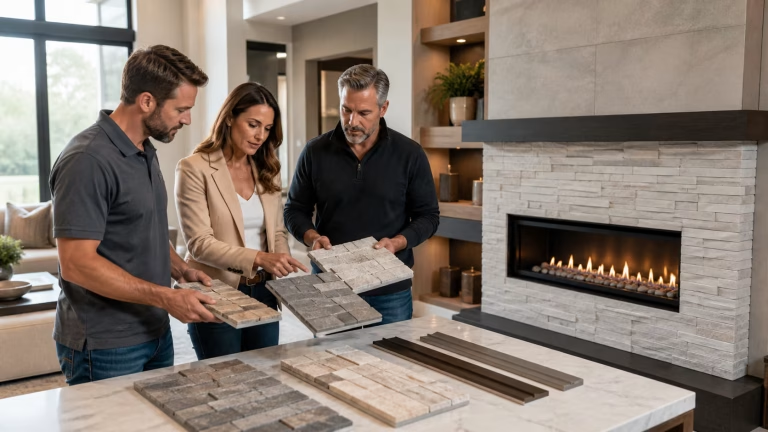
Standardizing fireplace packages is a construction operations decision, not a limit on design. For builders managing recurring plans, phases, and communities, a defined fireplace and stone approach can reduce repeated decisions and give every team a clearer starting point.
That does not mean every home needs the same fireplace. We find that production communities, repeatable plans, and phased developments often have the clearest opportunity to benefit. The practical question is what belongs in the baseline, where flexibility should stay, and how one coordinated trade partner can reduce handoffs from selection through installation.
Define the Community Baseline Early
A community baseline is not one identical fireplace in every home. Instead, we help builders establish approved categories and details that fit the plans, elevations, and intended price points. This gives purchasing, sales, design, estimating, and construction teams a shared scope before selections begin.
A workable baseline can identify:
- Which floor plans include a fireplace
- Approved fireplace categories and locations
- Exterior stone veneer selections by elevation
- Standard surround, trim, and finish approaches
- Buyer-facing upgrade paths for approved plans
Early decisions matter because fireplaces and stone touch several scopes. Framing must support the planned location. Gas, electrical, drywall, finish work, and exterior trades all need to understand what is coming and when. Manufacturer requirements, applicable code considerations, architectural details, and plan variations also need review before the work reaches the field.
Rather than trying to force a single specification across every elevation, we recommend creating repeatable scopes that fit each approved plan. That gives your team consistency without ignoring real architectural differences.
Use Builder Fireplace Packages to Reduce Variability
Defined builder fireplace packages can make estimating and purchasing more consistent. When your team works from established product options, stone selections, and installation scopes, there is less need to revisit the same decisions for every new start.
Consistency also supports field execution. Repeating approved details helps construction managers, superintendents, and adjacent trades recognize expectations early. It can also make schedule dependencies easier to spot before installation dates approach.
For example, a clear package can answer practical field questions before they become last-minute issues:
- Is the fireplace standard or an approved upgrade?
- What stone scope belongs on this elevation?
- Which trade needs to complete work before installation?
- Is there a plan-specific detail requiring review?
Fewer product and installer handoffs can also support clearer accountability. Since 1977, we have worked with Raleigh-area residential construction teams by supplying materials, scheduling installation, and coordinating with the broader build schedule. Having one partner responsible for the fireplace and stone scope helps limit communication gaps, follow-up questions, and avoidable punch-list work.
Keep Choices Controlled Across Elevations
Standardization does not require eliminating buyer choice or architectural variety. A controlled menu of approved fireplaces, surrounds, and stone options can give buyers options while keeping the construction process understandable for your team.
The base package should be straightforward for estimating and scheduling. Upgrades should be clearly separated, with defined selection deadlines and known installation implications. That structure allows your sales and design teams to present options without creating uncertainty for purchasing or field staff.
We recommend treating exceptions differently from approved choices. Custom requests, unusual plans, late buyer changes, and nonstandard architectural details should move through a clear review process. That process can confirm whether the request fits the plan, affects material needs, changes trade sequencing, or requires additional coordination.
Without an exception process, a one-off request can quietly become a field problem. With one, your team can protect the standard workflow while still reviewing legitimate design needs. The goal is not to say no to every variation. It is to make sure variations are identified, reviewed, and communicated before they affect the build schedule.
Plan Packages Before Fall Starts
Late summer is a practical time to review scopes ahead of fall starts, year-end scheduling, and future phases. Once selections, releases, and construction schedules become compressed, it is harder to resolve plan-specific questions without putting pressure on several teams at once.
A simple planning sequence can help keep the work organized:
- Review upcoming plans and elevations
- Identify recurring fireplace and stone needs
- Confirm standard packages and approved upgrades
- Set selection deadlines for nonstandard choices
- Align installation timing with the broader construction schedule
Early coordination also gives us time to discuss product availability, architectural review needs, and sequencing with framing, gas, electrical, drywall, and finish trades. Not every plan needs the same approach, but each approved plan should have a scope that is clear enough for the field to act on.
A package review before new phases begin can reveal where options have become too broad, where a detail is causing repeat questions, or where an upgrade process needs firmer deadlines. Those are easier adjustments to make before homes are underway.
Set a Scope That Fits Your Workflow
The best builder fireplace packages support your actual community standards, plan mix, and production schedule. A package should make recurring work easier to estimate, purchase, schedule, and install while preserving room for approved upgrades and plan-specific requirements.
Clear baseline choices, controlled options, and a defined exception process give your teams a practical way to create consistency across homes without losing the flexibility needed for the community.
Streamline Fireplace Coordination Across Your Builds
Review our builder fireplace packages to align product selections, installation, and scheduling across your communities. Brandco can help your purchasing and construction teams establish packages that fit your home plans and option structure. For an upcoming project, contact us to discuss your fireplace and stone requirements.
Frequently Asked Questions
What is a builder fireplace package?
A builder fireplace package is a pre-approved set of fireplace products, surround finishes, stone options, and installation details for a community or group of home plans. It creates a consistent starting point for estimating, purchasing, sales, and construction while still allowing defined upgrades.
Should builders use the same fireplace in every home in a community?
No, standardization does not require using one identical fireplace in every home. Builders can establish approved fireplace categories and finish options that fit different floor plans, elevations, and price points.
How do standardized fireplace packages help builders control costs?
Standardized packages reduce the need to repeatedly price products, review scopes, and coordinate different installation requirements for each home. Using approved options also makes purchasing, scheduling, and trade coordination more predictable.
What is the difference between a standard fireplace package and a fireplace upgrade?
A standard fireplace package includes the approved baseline fireplace and finishes included with a specific plan or community. An upgrade is a pre-approved optional product or finish that has separate pricing, selection deadlines, and potential installation requirements.
How can builders offer fireplace upgrades without disrupting construction schedules?
Builders can offer a controlled menu of approved upgrades with clear pricing, plan compatibility, and buyer selection deadlines. Custom or late changes should follow a review process to confirm framing, material availability, trade sequencing, and installation impacts before approval.